Web3
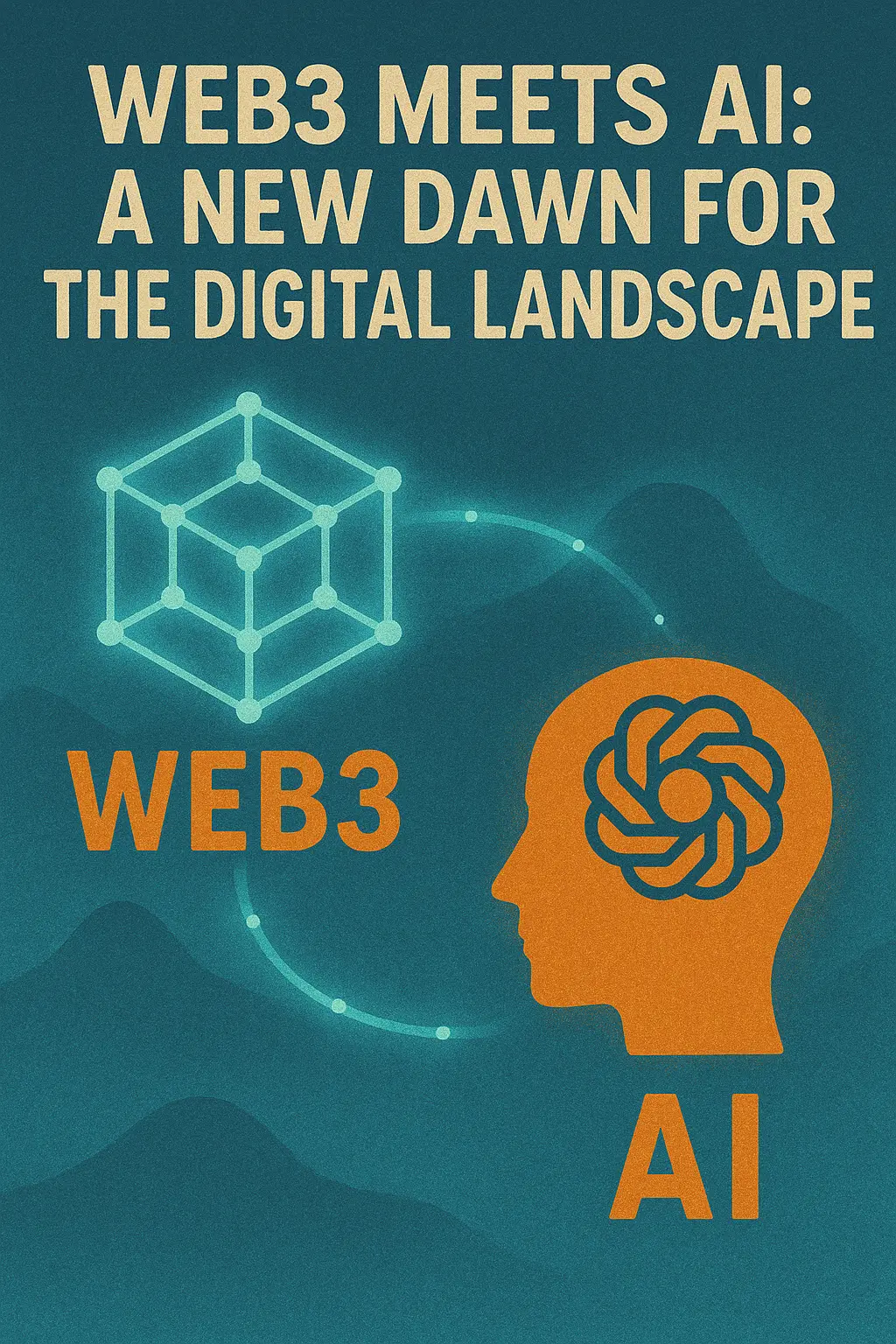
Web3 Meets AI: A New Dawn for the Digital Landscape In recent years, two of the most exciting buzzwords in technology—Web3 and Artificial Intelligence (AI)—have begun interacting in ways that promise to radically change how we browse, shop, interact, and even think online. Each on its own has potential: Web3 brings decentralization, user ownership, and trust; AI brings automation, prediction, and personalization. Together, they’re forming a powerful duo that is starting to reshape online experiences deeply.
What’s Driving the Convergence of Web3 and AI

Several recent developments lay the foundation:
- Decentralized AI agents: A recent study, Web3 x AI Agents: Landscape, Integrations, and Foundational Challenges (2025), examines over 130 projects blending AI agents with Web3 infrastructure, exploring their economic models, governance mechanisms, and how they promise new trust frameworks. arXiv
- New tools to help developers: For example, the collaboration between Sui and Alibaba Cloud introduced an AI-powered coding assistant for the Move language. This tool offers real-time feedback, vulnerability detection, and multilingual support, making Web3 smart contract development faster and safer. AInvest
- Funding & market shifts: Startups like Everlyn AI, focusing on on-chain video generation tools, recently raised millions. Predictions suggest that the AI-blockchain integration market may grow from about US$ 3.5B in 2025 to over US$ 40B or more by 2030, driven by demand for richer, smarter Web3 apps. AInvest
These are just snapshots, but they signal that the Web3 + AI partnership isn’t hype—it’s being built, tested, and scaled.
Key Ways Web3 + AI Are Transforming Online Experiences
Here are some concrete areas where users are already feeling the change—and more exciting developments on the horizon.
AI-Driven User Identity & Privacy

One of Web3’s promises is that you control your data and identity. AI can help manage that identity in smarter, more privacy-preserving ways: think decentralized identifiers (DIDs), zero-knowledge proofs, and AI systems that can verify credentials without exposing private information. Users might interact with services without needing to hand over tons of personal info, yet still get personalized experiences. The Forbes article “How Web3 Meets AI: A Dynamic Duo Transforming User Experiences” highlights how such identity and verification features powered by AI are becoming central to Web3 platforms. Forbes. Read More : Finance and Accounting Skills That Will Be in Demand in 2024
Personalized & Dynamic Content

AI’s ability to analyze behavior, learn, predict preferences is nothing new, but integrated with Web3 infrastructure, it can produce truly dynamic content—NFTs that change over time, content feeds that adapt without centralized servers, experiences that shift depending on on-chain behavior. For instance, platforms are building AI-curated recommendation engines within NFT marketplaces, helping users find what they love more efficiently, reducing spam and irrelevant content. NFT News Today+1. Read More : Finance Buzz: The Go-To Platform for Crypto Enthusiasts in 2024
Smarter, Safer Web3 Development

Developing smart contracts or decentralized applications (dApps) often involves high risk—bugs can cost millions. AI tools are being built to scan code for vulnerabilities, suggest best practices, automate testing. The Sui‐Alibaba assistant is one example. Another is frameworks like Eliza, a Web3-friendly AI agent OS, which aims to give developers tools to interact with blockchains automatically, read/write data, execute smart contracts, while maintaining user control. arXiv. Read More : How to Finance Car Tires: A Complete Guide for Smart Buyers
Enhanced Governance, Trust, and Security

Web3 already pushes for decentralized governance (DAOs, etc.), but often governance is slow, opaque, or dominated by the technically powerful. AI can help here: detecting patterns of voting, identifying malicious actors, forecasting proposals’ outcomes, or even automating parts of the governance process. Moreover, AI with Web3 can boost security—automated smart contract auditing, intelligent vulnerability detection, fraud detection in decentralized systems. The Web3 x AI Agents paper shows how projects are exploring these exact intersections: governance, security, trust. arXiv. Read More : Investors Are Asking: Is This Company Stock the Next Big Opportunity?
Immersive & Phygital Experiences

The metaverse, virtual shopping, and phygital (physical + digital) goods are becoming more common. Web3 provides the ownership, tokens, avatars; AI provides realism, personalization, interactivity. Examples include virtual malls where avatars try on clothes, AI chat assistants that help with aesthetic choices, or NFTs tied to real-world physical items. Webit’s blog noted how Web3 loyalty programs, metaverse stores, phygital experiences are being enhanced through AI verification and immersive tech. Webit Blog. Read More : The Rise of AI-Driven Teaching Gadgets in Modern Education
Challenges & Things to Watch
While the promise is huge, combining Web3 and AI introduces new obstacles:
- Scalability: AI models are data- and compute-hungry; many Web3 blockchains are still limited in throughput, latency, or inexpensive compute. Bridging the demands of AI with blockchain constraints remains a challenge.
- Ethics, fairness, bias: AI systems need data, and data can carry biases. When AI agents are making decisions or influencing trust in decentralized systems (governance, identity etc.), bias or unfairness can creep in.
- Regulation & compliance: Because Web3 often operates across borders and with less central control, combining it with AI (which might produce content, decisions, or predictions) raises questions about legal responsibility, data privacy laws (e.g. GDPR), accountability.
- User experience and usability: Web3 still has usability problems (wallets, gas fees, transaction delays). For many users, interacting with blockchains feels technical and intimidating. AI promises to smooth that, but it needs to be designed thoughtfully so that people trust it and feel empowered—not overwhelmed.
Looking Ahead: What’s on the Horizon for Web3 + AI

A few trends and possibilities that seem likely in the next 2-5 years:
- Agentic systems & emergent knowledge networks: Projects like ISEK (Intelligent System of Emergent Knowledge) are researching decentralized networks of AI and human agents working together, built on Web3 infrastructure. These could enable entirely new forms of collaboration and innovation. arXiv
- On-chain content creation: More tools for creators to generate images, video, music on chain; guaranteed ownership, transparent royalties, and rich interactivity.
- Interoperability and cross-chain AI services: AI tools that work across multiple blockchains, pulling data, invoking contracts, verifying identity across ecosystems without needing separate accounts or wallets.
- Token-incentivized behavior & reputation systems: Web3 allows rewards tokens, NFTs, or badges; combined with AI analyzing behavior, these can help build reputation systems that are harder to game, more meaningful, more aligned with community values.
About the Author