5G Signal
Stronger 5G Signal for a Connected Tomorrow
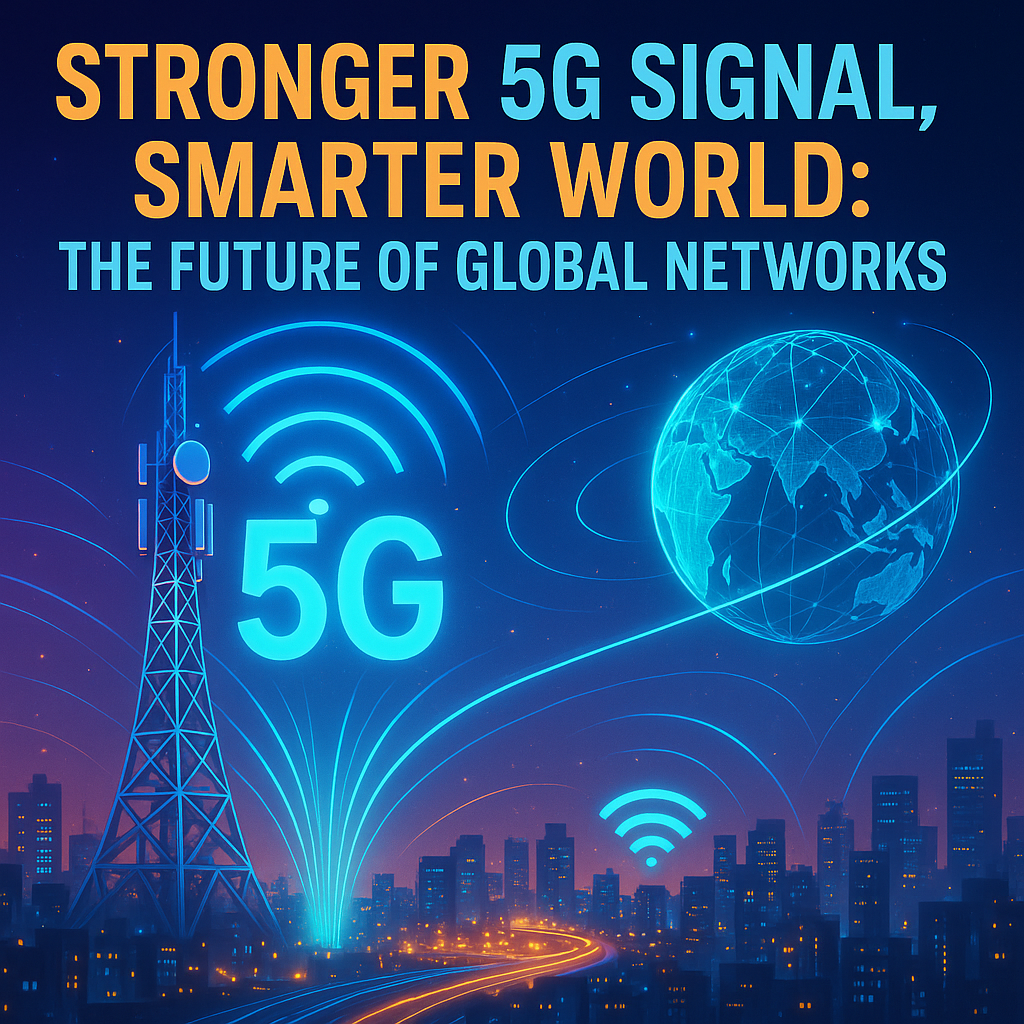
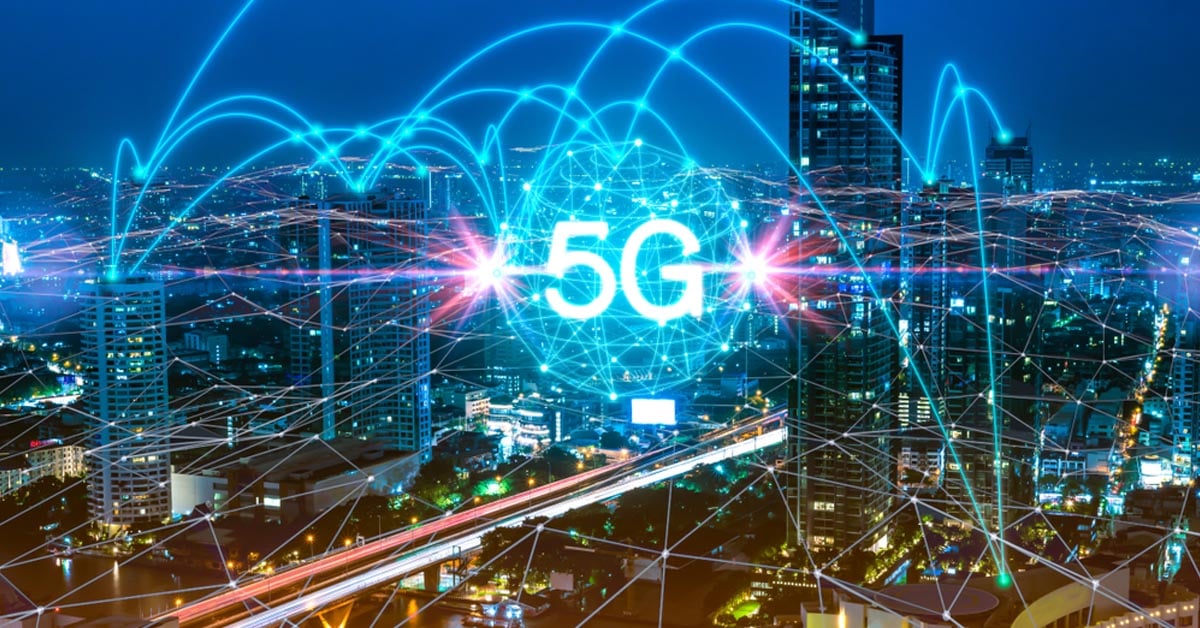
Stronger 5G Signal, Smarter World: The Future of Global Networks The promise of a stronger 5G Signal is no longer a distant marketing slogan — it’s the backbone of a rapidly evolving global infrastructure that will touch how we work, learn, heal, and create. Network operators and vendors are investing heavily in mid-band coverage, mmWave deployments, and smarter radio access networks so that that 5G Signal moves from “fast where you’re lucky” to “fast where you live.” Recent industry forecasts show accelerating adoption and targeted investments to expand reach and reliability. ericsson.com+1
Why signal strength matters more than ever

A clear, consistent 5G Signal does more than speed up downloads — it unlocks use cases that were previously theoretical. Low-latency slices for remote medicine, high-throughput pipes for augmented reality experiences, and robust fixed wireless access for underserved communities all depend on measurable improvements in signal quality and spectrum utilization. Researchers and operators are improving scheduling, slicing, and antenna design to reduce packet loss and latency while increasing fairness across users — advances that directly translate to a more dependable 5G Signal in practice. Nature+1
From cities to countryside: making the 5G Signal universal

Coverage isn’t equal everywhere. While urban centers are seeing dense rollouts, progress in rural and suburban areas has accelerated thanks to fixed wireless access (FWA) and new mmWave strategies that bridge the last-mile gap. Operators are pairing macro sites with smart antennas and targeted mmWave cells to bring a stable 5G Signal into neighborhoods and campuses, not just stadiums and downtown corridors. Industry reports estimate significant jumps in population coverage across regions over the next few years, driven by both public policy and private investment. ericsson.com+1. Read More :How Website AI Makers Are Revolutionizing the Future of Web Design
Smarter networks: AI, slicing, and spectral efficiency
The next generation of networks will be as much software as hardware. AI-driven radio optimization, dynamic spectrum sharing, and intelligent power management are enabling networks to direct scarce resources exactly where they’re needed — improving latency, throughput, and energy use. These innovations let operators tune the 5G Signal in real time, creating virtualized slices for critical services (like telemedicine or industrial control) and keeping everyday traffic smooth and responsive. Industry demonstrations at recent conferences underline how modem and silicon improvements are also pushing practical performance boundaries. Qualcomm+1
Real-world benefits: education, health, and local economies

When a reliable 5G Signal reaches schools, clinics, and small businesses, the effect is immediate and measurable. Remote learning platforms gain the responsiveness needed for immersive experiences; clinics can support tele-surgery prototypes and real-time diagnostics; small towns can attract digital-led enterprises that once required fiber. Studies and regional economic models suggest that the economic uplift from comprehensive 5G deployment is not just theoretical — it can translate to job creation, faster services, and new revenue streams across sectors. GSMA+1. Read More :ESG and Green Finance: A Financial Institution Approach to Sustainable Growth
Overcoming hurdles: spectrum, policy, and perception

Expanding a dependable 5G Signal isn’t purely a technical challenge. Regulators, municipal planning, and public perception all play big roles. Spectrum allocation and streamlined permitting can speed rollouts; conversely, uncertainty over siting or policy hampers momentum. The telecom ecosystem is increasingly focused on collaborative approaches — sharing infrastructure, aligning on standards, and communicating clearly with communities to reduce friction and accelerate the pace at which people feel the benefits of a better signal.Review.gsma.com. Read More : Business Analyst Jobs in Tech: What Sets Them Apart from Other Industries?
What comes next: convergence and human-centered design

Looking ahead, the most transformative shifts won’t be about raw Mbps but about how seamlessly networks integrate with people’s lives. A dependable 5G Signal will be a silent enabler — powering AI agents that assist in daily tasks, autonomous systems that improve safety, and hybrid reality experiences that expand human potential. As networks become smarter, they’ll require less manual tuning and more human-centered design, ensuring technological advances uplift real communities and not just benchmarks. Read More :Business Analyst Jobs in Tech: What Sets Them Apart from Other Industries?
Call to action for cities and businesses

Leaders who want to harness this wave of connectivity should think holistically: align spectrum and infrastructure plans, partner with vendors experimenting with mid-band and mmWave strategies, and invest in digital skills so communities can use — not merely receive — the benefits of a stronger 5G Signal. The smartest investments are those that combine technical rollout with programs that turn connectivity into capability, because when everyone can reliably tap into high-quality networks, innovation follows organically. ericsson.com+1. Read More : Business Acumen: The Secret Weapon for Strategic Leadership in 2024
About the Author